Category: Buying Guides

  • Hot and Cool Facial Devices: A Practical Introduction for Beauty Brands

    Hot and Cool Facial Devices: A Practical Introduction for Beauty Brands

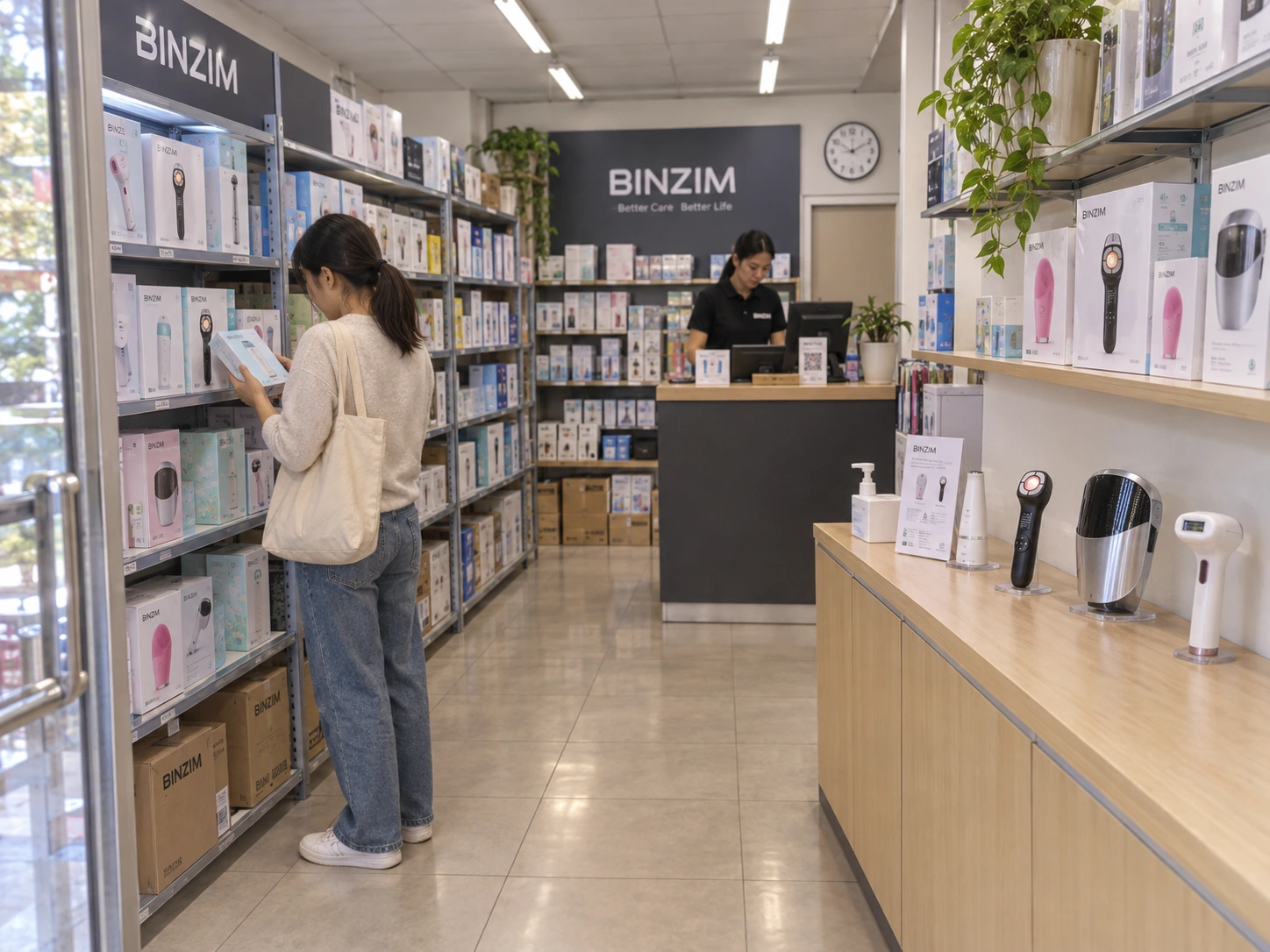
    AI-generated retail illustration featuring BINZIM beauty devices.

    What is a hot-and-cool facial device?

    A hot-and-cool facial device brings warming and cooling modes into a handheld skincare format. For beauty brands, the appeal starts with a simple product idea: an everyday device whose main functions can be introduced without a long list of unfamiliar technology names. The actual experience depends on the contact head, controls and instructions of the selected model.

    Begin by distinguishing the device category from the promises a brand may want to make about it. A warm or cool surface is a functional characteristic. A claim about changing skin structure or delivering a measurable cosmetic result needs its own supporting evidence. A product introduction should explain the proposed experience without allowing a familiar sensation to stand in for proof of a benefit.

    Read the product as a sequence of user actions

    Imagine the customer opening the box for the first time. Can they identify the contact surface, select the intended mode and recognize when operation has started? Can they distinguish the controls without repeatedly returning to the manual? These questions help a brand evaluate whether the device fits its audience and the support it can provide.

    During sampling, review the complete sequence from storage to preparation, operation and cleaning. Use the supplier’s instructions for the exact model. Record anything that requires an extra explanation, such as an indicator that is difficult to interpret or an accessory that is not identified clearly. The result is a list of communication and design questions, not a new treatment protocol.

    Ask what the temperature description actually means

    A temperature printed on a sales sheet should come with context. Ask where it is measured, how long the mode takes to reach its operating condition, which environment was used and how the contact surface is controlled. A minimum reading taken under one condition is not a complete description of a customer’s session.

    Ask the supplier which evaluation records identify the proposed hardware and how the relevant checks are performed. If two sample versions behave differently, record both revision numbers before comparing them. Avoid selecting a product simply because its catalogue advertises a more extreme temperature; the decision needs to account for the intended experience and the evidence available for that version.

    Look at the head and handle together

    The shape of the head affects where and how the device can be positioned, while the handle affects grip and visibility of the controls. Inspect these parts together. A compact head may be easy to photograph but still need a clearer demonstration of the approved handling method. A smooth housing should also be assessed for grip during the intended routine.

    For a sample review, note the transitions between materials, the ease of following the cleaning instructions and the way the device is stored after use. Agree which observations are preferences and which become acceptance criteria. This keeps the brand’s aesthetic direction connected to a practical production specification.

    Keep additional functions specific to the model

    Some products in this category also describe LED, vibration or other functions. Do not assume that every hot-and-cool device includes the same combination. Ask for a mode map showing which functions operate together and which can be selected independently. Match the explanation to the actual sample and proposed instruction artwork.

    The same discipline applies when writing an introduction for a private-label version. State the confirmed functions using consistent terms. Keep exact wavelengths, battery capacity, session timings and accessories tied to the approved specification instead of assembling a stronger-looking description from several historical documents.

    Turn the introduction into a useful purchasing conversation

    A focused inquiry should identify the target market, sales channel, selected model, first-order quantity and requested branding changes. Include the proposed box contents and manual languages. Then ask which parts of the configuration are already available and which need engineering review or another sample.

    BINZIM’s BZ-0508 is a catalogue example of the handheld hot-and-cool format. A brand considering this model can start with its appearance and catalogue dimensions, then request the current configuration and sample information. Confirm the applicable documents and commercial terms for the intended market before preparing the final launch material.

    Explore the catalogue model: BINZIM BZ-0508 Hot & Cool Facial Device.

    Further reading

    Hot and Cold Facial Massager — R1120 — Rhafine. Category reference reviewed October 24, 2026. Product configurations are model-specific.

    Confirm current specifications, supplied accessories and available documentation for your project before ordering.

  • How to Compare Beauty Device OEM Quotes Beyond Unit Price

    How to Compare Beauty Device OEM Quotes Beyond Unit Price

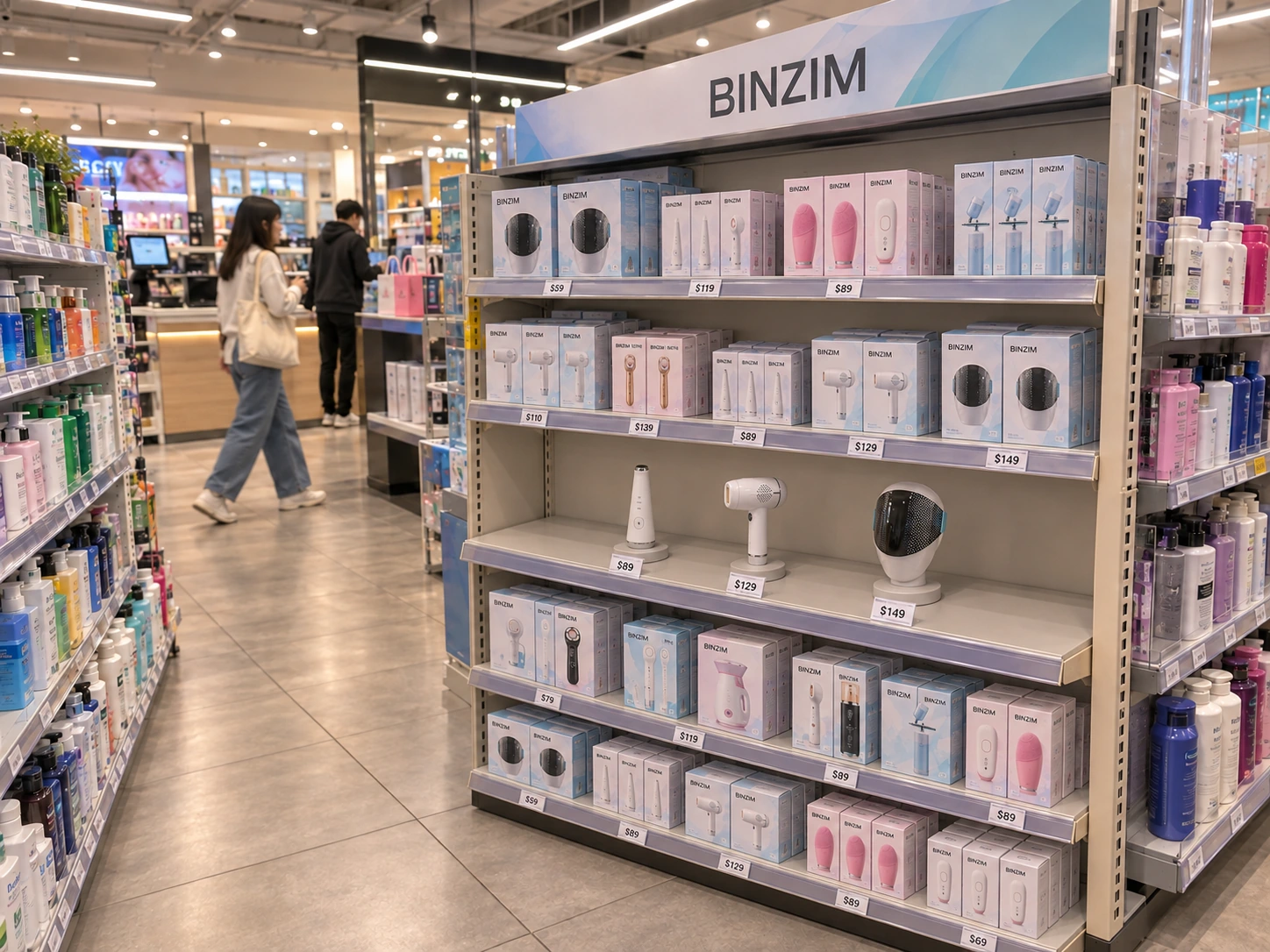
    AI-generated retail merchandising concept. Packaging and price labels are illustrative.

    Two beauty device quotations can look comparable until the first sample arrives. One may include a retail box and charging cable; another may cover the device in a basic bag. One may assume standard branding while another includes an engineering change. A useful comparison begins by making the deliverables identical, then separating the costs that repeat from those that occur once.

    Create a single reference offer

    Describe one complete saleable unit from your customer’s perspective: device, accessories, packaging, instructions and intended brand presentation. Give the specification a date and revision number, and send the same version to every shortlisted supplier. If a supplier proposes an alternative, ask for it as a separate option rather than letting it silently replace the reference offer.

    For example, a brand may want a facial device bundled with a pouch and a localized manual. If the pouch is missing from one quotation, the difference is not yet a manufacturing saving. Mark it as an unresolved scope item. This simple discipline prevents a low headline price from becoming the baseline for an incomplete product.

    Make every quoted line answer one question

    Cost groupQuestion for the supplier
    Recurring product costsWhat exactly is included in each finished unit at this order quantity?
    One-time project costsWhich sample, development, tooling or artwork charges apply, and what do they deliver?
    Order-level costsWhich inspection, shipping preparation or other batch charges are separate?
    Buyer-side costsWhat will our team need to arrange for launch and delivery?

    Keep the currency, quotation validity, payment milestones and delivery basis visible on the same worksheet. Record the named delivery location. A price that ends at the factory gate cannot be compared directly with an offer including additional transport arrangements. Ask your logistics partner to complete the delivery portion for your actual shipment.

    Use the first-order quantity for the first-order calculation

    The first launch must stand on its own economics. A price based on a future volume forecast is useful for planning, but it should not replace the price for the quantity you are actually buying. Request separate quantity options and identify what changes at each level: unit cost, packaging minimums, production setup, or available customization.

    A useful internal calculation is: first-order planning cost per saleable unit equals recurring goods costs plus allocated project and order costs, divided by the quantity expected to be available for sale. Use consistent assumptions for evaluation units and other planned allocations. Keep uncertain costs as estimates with named owners; an empty cell should not automatically become zero.

    Run a second calculation for the repeat order. Removing a tooling fee may improve that calculation, but only if the repeat product remains unchanged and no new fee applies. Confirm how long the quoted price can remain valid and which component, packaging or quantity changes would trigger a revised offer.

    Turn exclusions into decisions before paying a deposit

    Highlight anything the quotation leaves to later agreement. Packaging inserts, barcode artwork, translated instructions and a different charging accessory can all create work outside the device assembly itself. Assign each item to the brand, supplier or another service provider, and record the approval date needed to protect the launch schedule.

    Documentation also needs an exact scope. Ask which files are available for the selected model and configuration, which additional review or testing is being quoted, and who will coordinate it. A generic list of certificate names does not establish what your branded version will receive. Requirements depend on the product, intended use and destination market.

    Compare the response as well as the number

    A clear answer to an awkward question is valuable purchasing information. If a supplier identifies a design change that needs validation, include that work in the comparison. If a price depends on an unspecified substitute component, request a defined alternative. The goal is to understand the offer well enough to approve it, explain it internally and use it again on a repeat order.

    • Match every offer to the same dated specification and quantity.
    • Separate device, packaging and accessory options.
    • Show one-time fees apart from recurring costs.
    • List exclusions, assumptions, delivery basis and quote validity.
    • Confirm the process for additional changes after sample approval.
    • Document repeat-order pricing assumptions and after-sales responsibilities.

    Request a proposal that supports a decision

    When approaching BINZIM, send the exact model or product concept, target market, customization list, first-order quantity and packaging expectations. Ask for an itemized proposal and keep optional changes separate. That allows your team to compare a defined product program rather than several different interpretations of a short inquiry.

    Send BINZIM your model and project requirements →

    Related guide: Choose the manufacturing route before fixing the budget.

    Editorial background & further reading

    Industry reading: Beauty Device OEM Checklist for Skincare Brands — FITTOP.

    Reviewed October 24, 2026. Confirm current specifications, available documents and commercial terms for the exact model and target market before ordering.

  • LED Face Mask OEM Selection: Fit, Light Output and Sample Evidence

    LED Face Mask OEM Selection: Fit, Light Output and Sample Evidence

    AI-generated home-use illustration of the BINZIM BZ-3083 LED face mask.

    An LED face mask can look convincing in a product rendering and still be awkward to position, difficult to clean or confusing to operate. For a private-label brand, those details become customer questions and support work. Evaluate the proposed mask as a complete routine, with technical data attached to the same configuration you handle during sampling.

    Begin with the use setting

    Describe where the customer is expected to use and store the mask. A product intended for a small home needs a different packaging and storage discussion from a gift set with several accessories. Consider whether the user must remain close to a power source, where the controller rests, and how the cable behaves when the user changes posture. These practical questions help narrow the sample shortlist before comparing decorative features.

    Build a brief evaluation script for every sample. Include unboxing, identifying parts, fitting the strap, finding the controls, understanding the instructions and packing the product away. Observe how easily a reviewer completes each step without extra coaching. Use the approved instructions and the applicable evaluation procedures; do not invent operating settings for the exercise.

    Review fit as a system of interacting parts

    Mask shape, flexibility, strap placement, openings and controller weight interact. A soft material alone does not tell you whether a mask stays in place or whether the cable pulls on it. Record observations against the sample revision, including pressure points, strap adjustment and ease of removal. A small internal usability review helps identify design questions; it is not a clinical study or safety certification.

    The eye-area design deserves specific discussion with the supplier. Ask how it is intended to be used and what protective measures and instructions belong to the exact model. A comfortable visual impression cannot substitute for the relevant safety assessment. Keep use guidance consistent across the device, manual, packaging and product listing.

    Ask for an output description you can compare

    Color names and the number of LEDs are a starting point for a conversation, not a complete performance specification. Ask what each operating mode activates, which output characteristics have been measured, and under what conditions. If irradiance is quoted, the measurement location, distance and method need to accompany the value. Avoid ranking samples by the largest isolated number.

    For a combined mode, ask whether the data describes the combination or only one light channel tested separately. Keep model number, controller version, sample identification and report date together. When a supplier proposes a different configuration, request an explanation of what needs to be re-evaluated rather than carrying all previous assumptions forward.

    Review areaWhat your team should retain
    Fit and handlingNotes linked to the sample revision and the instructions used.
    Operating modesA clear mode description consistent with the controller and manual.
    Measured light outputIdentified report or measurement record with stated conditions.
    Packaging and careAn approved parts list, storage arrangement and cleaning instructions.

    Keep safety documentation separate from benefit claims

    A report should be read for what it actually assesses. IEC 62471 addresses photobiological safety of lamps and lamp systems; a report within that scope does not, by itself, establish a cosmetic benefit. Review its model identification, tested configuration and conditions. The relevance of a standard and the documents needed for launch depend on the exact product and intended market.

    Make a claim register for your proposed listing: the wording, the evidence supporting it, the product version and the person approving publication. This prevents an attractive phrase from another supplier’s catalogue from becoming a claim about your private-label mask. Keep technical feasibility, safety review and claim substantiation as distinct decisions in the project file.

    Turn the sample review into a clear next step

    At the end of sampling, group the findings into acceptable items, changes requiring another sample, and unresolved document questions. Assign an owner and closure date to each. Avoid approving production while a necessary change remains described only as “improve comfort” or “make light stronger.” Define what will be checked on the next version and how it will be accepted.

    • Which exact mask, controller and accessories are included?
    • Can the supplied instructions be followed without additional explanation?
    • Do the measured-output records identify the proposed configuration?
    • What evidence supports each intended sales claim?
    • Which requested changes require a new evaluation before production?

    For a BINZIM LED project, begin with the available catalogue model and request current specifications, sample arrangements and model-specific documents. Confirm your market, intended claims and customization scope before treating any catalogue description as a finished launch specification.

    Explore BINZIM’s device catalogue →

    Related guide: Connect sample findings to production acceptance.

    Editorial background & further reading

    Industry reading: LED Face Mask OEM Sourcing Guide: How to Choose the Right Manufacturer for Your Brand — Wakelife.

    Standard scope reference: IEC 62471:2006 — Photobiological safety of lamps and lamp systems.

    Reviewed October 24, 2026. Confirm current specifications, available documents and commercial terms for the exact model and target market before ordering.