Category: Technology & Quality

  • RF, EMS and LED Beauty Devices: Build a Clearer Product Brief

    RF, EMS and LED Beauty Devices: Build a Clearer Product Brief

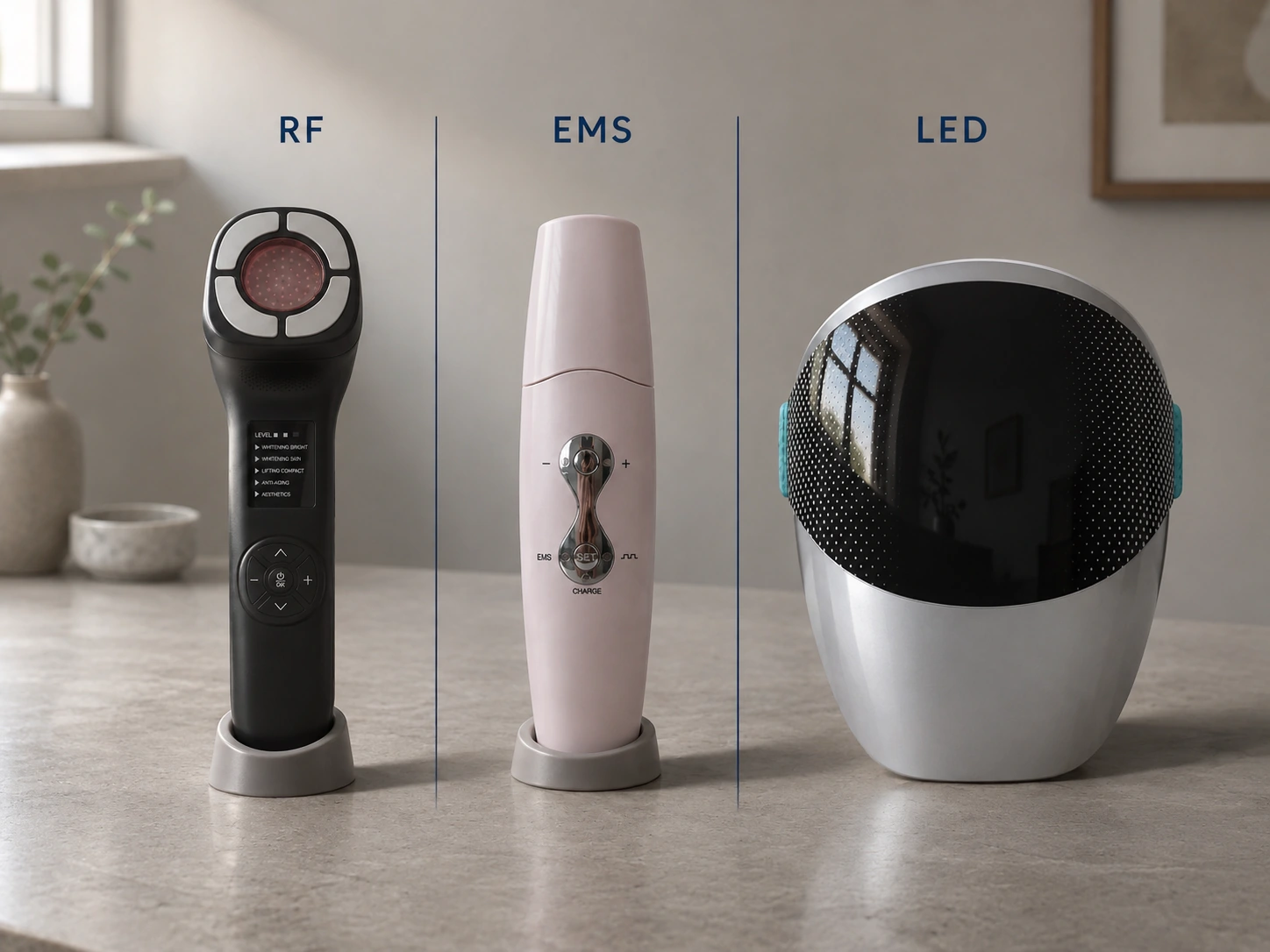
    AI-generated comparison of BINZIM RF, EMS and LED device examples.

    A long list of technologies can make a beauty device sound versatile while leaving the buyer unsure what the customer will actually do with it. RF, EMS, microcurrent, LED, vibration and heating describe different aspects of a product. For a brand planning an OEM project, the useful question is how each proposed function fits the routine, the controls and the evidence for the exact model.

    Give the product one primary job

    Write a short description of the intended experience without using a feature list. For example, a brand might want a compact device with a straightforward evening routine and an interface that can be explained in a short demonstration. That brief immediately raises useful questions about grip, mode selection, session completion and storage. It also makes unnecessary complexity easier to recognize.

    Decide which feature is essential to the concept and which would only be useful if it does not complicate the product. Treat an additional mode as a design decision with a purpose, an interface requirement and an evaluation task. This gives engineering and purchasing the same definition of what the brand is trying to launch.

    Translate technology names into an evidence request

    Label in the product briefQuestion to put to engineering
    RFHow is RF output specified, controlled and verified on this configuration?
    EMS or microcurrentWhat output description and operating conditions support the exact term used?
    LEDWhich light channels operate in each mode, and what measurements are available?
    Heating or coolingHow is surface temperature controlled and evaluated during the intended use?
    VibrationWhat pattern, user control and functional checks define the proposed mode?

    Do not infer RF from a warm contact surface, or identify a device as microcurrent simply because it has metal electrodes. EMS and microcurrent should not be treated as interchangeable labels without the model’s technical definition. Ask the supplier to reconcile the terminology across its quotation, specification, sample, manual and packaging.

    Evaluate the combined routine, not isolated feature demonstrations

    A multifunction product may activate features together or in separate modes. Ask for a mode map showing what turns on, what the user can adjust, what the indicators mean and how the device stops. Review that map with the actual sample. If two modes look identical to the user, the manual or interface may need clarification even if both function as designed.

    Create a simple scenario review: starting from storage, preparing the device as instructed, selecting the intended mode, recognizing normal operation, finishing and cleaning. For each step, note what the customer must know and what the product communicates. This is an evaluation framework for the brand team, not a substitute for technical testing or approved use instructions.

    Budget for every feature you choose to explain and support

    A function can affect more than the bill of materials. It may add control logic, user instructions, evaluation work, photography requirements and after-sales questions. Ask which changes are already supported by the platform and which need development. A feature that appears inexpensive at component level may create a larger project if it changes the housing, power arrangement or document scope.

    One practical decision tool is a feature register with five fields: customer purpose, technical definition, user action, verification method and publication evidence. Leave a feature out of the launch specification if the team cannot explain why it is there or what would demonstrate that it has been implemented as agreed. Revisit it later with a better-defined requirement.

    Keep the proposed customer benefit tied to the proposed device

    A supplier’s general technology explanation cannot establish the results of every product using that technology. Build the marketing plan around evidence for the exact configuration and its intended use. Avoid borrowing clinical language, treatment claims or before-and-after promises from a different device category. A non-invasive home-use product brief also should not inherit claims from invasive professional equipment.

    Ask for current documentation and qualified review appropriate to your target market before finalizing claims. During development, keep proposed wording marked as pending until the responsible reviewers have assessed it. That makes the handoff from product development to the content team much clearer.

    Start the BINZIM conversation with a focused shortlist

    Select one or two catalogue models that fit your intended routine, then list the functions you need to retain, remove or evaluate. Request the current specification for each complete model number, including any suffix. Compare the samples against the same brief before deciding whether an existing platform or deeper development is appropriate.

    Review BINZIM OEM/ODM development options →

    Related guide: Read the LED face mask evaluation guide.

    Editorial background & further reading

    Industry reading: Beauty Device Technology and Manufacturing FAQ — Ace-tec.

    Reviewed October 24, 2026. Confirm current specifications, available documents and commercial terms for the exact model and target market before ordering.

  • Beauty Device Quality Control: From Approved Sample to Shipment

    Beauty Device Quality Control: From Approved Sample to Shipment

    AI-generated quality-inspection illustration based on BINZIM production references.

    Approving a beauty device sample is a decision about a specific version. It is not a complete instruction for producing every unit in an order. The handover to production needs to explain what was approved, how it will be checked and what happens if something changes. A clear quality plan helps a brand and its manufacturing partner investigate differences before they become a shipment dispute.

    Make the approval record usable by someone outside the sample discussion

    Imagine that a new inspector joins the project after the sample has been signed off. Could that person identify the correct model, finish, operating sequence, accessories and packaging without reading months of messages? If the answer is no, the project needs a clearer handover package. Combine an identified reference sample with a dated specification and a record of the final decisions.

    Separate accepted details from outstanding changes. An email saying “looks good, but adjust the button and improve the box” should not become unconditional production approval. Record the button revision and packaging revision, then define what must be submitted and checked before the order can proceed. Both parties should be working from the same current reference.

    Turn subjective expectations into observable criteria

    Words such as premium, smooth and durable communicate a direction but leave too much room for disagreement at inspection. Use agreed visual references for finish and workmanship. Define the functional checks against the model’s specification and operating instructions. Where a measurement matters, agree the method and acceptance criteria with the responsible technical team.

    Ambiguous instructionMore usable approval record
    Make the color more premiumReference an approved color or physical master under agreed viewing conditions.
    The buttons must work wellIdentify the required response and operating sequence for each control.
    Use strong packagingApprove the pack construction and define the relevant transport evaluation.
    Keep the product the sameIdentify the controlled revision and the changes requiring written approval.

    These examples illustrate how to write a quality plan; they are not universal technical limits. Product type, materials, intended use and order conditions determine which checks are appropriate. A decorative finish and an electrical function should not be accepted using the same kind of evidence.

    Ask what the pilot build needs to resolve

    A pilot build is useful when it answers defined production questions. Those may include assembly fit, work instructions, packaging sequence or the repeatability of an agreed functional check. List the open questions beforehand, assign owners and retain the findings. Avoid treating pilot production as a ceremonial step that automatically releases the full order.

    BINZIM’s company materials describe quality checks across incoming materials, assembly and finished products, and its development process includes a small trial-production stage. For a specific order, confirm the actual inspection points, test scope and records available. A general process description is a starting point for the project plan, not a guarantee that every possible test is included.

    Control changes between approval and shipment

    Create a short change notice whenever the proposed production version differs from the approved one. State what changed, why it changed, which units it affects and what re-evaluation is needed. The brand should know whether the change affects appearance, operation, accessories, packaging or the supporting documents. Record the decision before the revised version becomes the new reference.

    For example, a different charging arrangement may affect the customer instructions and the pack layout even if the housing looks identical. The commercial team, engineering team and packaging supplier need the same update. This is an illustrative dependency, not permission to substitute components without the agreed approval.

    Agree the shipment evidence before the inspection date

    Define who performs the final inspection, how units are selected, which checks are included and what happens when a result does not meet the agreed criteria. Where a sampling plan is used, its scope and acceptance rules should be agreed in advance. Sampling and a functional check on every unit answer different questions; neither should be described as proving zero defects.

    • Order, model and revision identifiers for the inspected goods.
    • The reference specification and inspection plan used.
    • Results for the agreed appearance, function and packing checks.
    • A record of nonconformities, corrective action and any re-inspection.
    • A documented release decision and a list of any remaining obligations.

    Keep the record useful for the next order

    After delivery, connect reported issues to the relevant batch and the conditions in which they occurred. Agree how samples, photographs and operating information will be collected for investigation. The aim is to distinguish an isolated issue from a repeatable pattern and to carry accepted improvements into the next specification revision. Commercial remedies and warranty responsibilities should follow the order agreement.

    When discussing a BINZIM project, send the selected model, intended market and the quality evidence your purchasing process requires. Ask for an agreed sample-review and production-control plan before committing to the bulk order.

    Discuss your sample and quality requirements with BINZIM →

    Related guide: Include evaluation and inspection scope in your quotation comparison.

    Editorial background & further reading

    Industry reading: OEM Beauty Device Quality Control Checklist: What Brands Should Inspect Before Mass Production — Luzterbeauty.

    Reviewed October 24, 2026. Confirm current specifications, available documents and commercial terms for the exact model and target market before ordering.